What an anion gap calculator truly measures
An anion gap is a computed value that helps clinicians evaluate electrolytes and evaluate acid-base balance. An anion gap calculator does not measure a substance directly. Instead, it uses standard serum electrolytes from bloodwork to infer the difference between major positively charged and negatively charged ions in the blood.
In clinical terms, the calculator uses values such as sodium and chloride, along with other lab values, to estimate whether there may be excess unmeasured anions. This makes it a valuable diagnostic aid and sometimes a screening tool for an acid-base disorder. However, its accuracy depends on how the data were collected and how the result is interpreted.
The anion gap is best understood as a clue, not a final answer. A calculator can be highly useful for identifying patterns that suggest metabolic acidosis or another electrolyte problem, but it does not replace a full clinical assessment. Its value comes from combining a quick calculation with the broader picture of symptoms, history, and other blood tests.
How exactly anion gap is computed from lab values
The standard formula for anion gap typically uses bicarbonate, sodium, and chloride, and sometimes potassium. One common approach is sodium minus chloride minus bicarbonate. Some tools use potassium, while others leave it out because the difference is generally small and the simpler formula is simpler to apply in routine practice.
These values usually come from a serum chemistry panel, which provides standard chemistry measurements from a blood sample. Because the calculator is only as accurate as the underlying lab values, any error in that panel can affect the result. That is why the reliability of anion gap calculator is tied closely to the quality of the source data.
An important distinction exists between precision and clinical usefulness. A calculator can be precise in doing the arithmetic correctly every time, yet still lead to an unhelpful conclusion if the underlying values are distorted or incomplete. In other words, the math may be exact, but the interpretation may still require medical judgment.
Most calculators are highly reliable for the arithmetic itself. The bigger question is whether the result reflects the patient’s true physiologic state. Here is where the relationship between the calculator, the serum chemistry panel, and the clinical situation becomes essential.
What influences the reliability of the result
A number of factors can lower the accuracy of an anion gap calculator, even when the formula is correct. One major issue is testing error, which can occur at different stages of testing. If even one of the component measurements is wrong, the final anion gap may also be wrong.
Sample handling matters as well. Waiting too long before analysis, improper storage, or contamination can change the measured electrolytes and create a misleading result. Even small shifts in sodium, chloride, or bicarbonate can alter the calculation enough to shift the clinical impression.
Testing variation is another important source of error. Different machines and methods may produce slightly different values, and those small differences can have a noticeable effect when the anion gap is near the upper or lower end of the reference range. This is why a result should always be viewed with consideration of the test platform and Find more info the lab’s own reporting methods.
Device calibration also influences reliability. If equipment is not calibrated correctly, the reported electrolyte levels may drift away from the true values. In that situation, the calculator can look mathematically sound while still producing a misleading number. This is a good example of why accuracy in medicine is not just about the formula; it also depends on the quality of the measurement process.
Because of these factors, an anion gap calculator should be treated as a strong but not perfect tool. It is reliable for routine use, but it is not immune to testing error. The more borderline the result, the more important it becomes to verify the data and consider repeating the test if needed.
How albumin affects the assessment
Albumin plays a substantial effect on the anion gap because it is one of the key unmeasured anions in blood. When albumin is low, the anion gap may seem normal even if a clinically important acid-base problem is present. This is why hypoalbuminemia can make the result appear less abnormal than it really is.
To address this, clinicians often use a corrected anion gap. This adjusted calculation adjusts for low albumin and can highlight hidden abnormalities that the standard calculation may miss. For example, a patient with low albumin may have a deceptively normal gap, but after correction, the gap may indicate a more significant disturbance in acid-base status.
This correction strengthens interpretation, but it does not create certainty by itself. The corrected value still needs to be considered alongside the other parts of the lab panel, symptoms, and the overall clinical picture. It is a better estimate, not a perfect substitute for judgment.
Knowing albumin is essential because it changes how the anion gap is read. Without albumin, the anion gap clinical significance calculator may be accurate in a narrow arithmetic sense but incomplete in a clinical sense. With albumin included, the result becomes far more useful for real-world interpretation.
Frequent scenarios that can skew the calculator
Certain acid base conditions can cause anion gap interpretation tricky. Respiratory alkalosis, for example, may coexist with changes in electrolytes that cloud the picture. Even though the anion gap calculator may produce a number that looks clear, the underlying disorder may not reflect the initial assumption.
Metabolic acidosis is one of the main reasons an anion gap is checked, but not all cases present the same way. A high gap often points to the presence of extra acids or unmeasured anions, yet the cause can range broadly. This is where the calculator becomes a starting point rather than an ultimate answer.
Lactic acidosis can elevate the anion gap, but the result depends on timing, severity, and how the body is compensating. A patient early in the course of illness may not yet display a dramatic change. Likewise, a patient with improving lactate may still have lingering abnormalities that require context to understand.
Ketoacidosis is another situation in which the gap may rise substantially. However, if the lab values are affected by treatment, fluid shifts, or other conditions, the calculator may minimize or overstate the severity. That is why a single number should never be interpreted in isolation alone.
This evidence show how a calculator can be precise mathematically yet still be unreliable clinically. The issue is not only the arithmetic; it is the fit between the result and the patient’s actual physiology.
How clinicians use anion gap results in clinical practice
Medical professionals interpret anion gap values as part of a wider differential diagnosis. A elevated or reduced result may help to narrow possibilities, but it rarely offers a full answer on its own. Instead of that, it is one piece of information among history, exam findings, and additional blood tests.
When the anion gap suggests an electrolyte imbalance, the next step is usually to ask what could be behind it. That might include acid build-up, kidney problems, medication side effects, or a laboratory issue. The best use of the result is therefore tied to clinical context, not just the number itself.
In practice, the anion gap is often a screening tool for hidden metabolic problems. It can signal a potentially serious disorder before the diagnosis is obvious. At the same time, because it is indirect, it can also lead to a false positive or false negative if the rest of the picture is ignored.
That is why clinicians think in terms of interpretation rather than simple pass-or-fail thresholds. The same value may mean something different depending on albumin level, other electrolytes, recent treatments, and the patient’s symptoms. This kind of contextual interpretation is what turns a calculator result into meaningful medical information.
When an abnormal result needs further assessment
An abnormal result should be examined more closely when it is clearly outside the expected reference range or when symptoms raise concern for a serious illness. A high anion gap often suggests excess acid production, impaired clearance, or a toxic process. A normal anion gap does not automatically mean that everything is fine, especially if other findings indicate a problem.
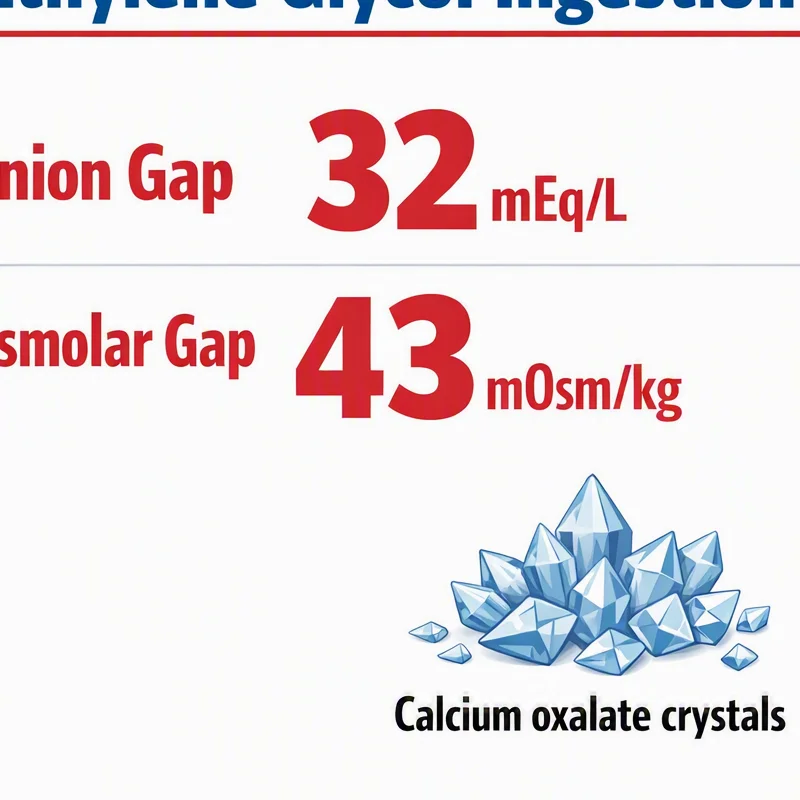
Renal failure is one common reason for an elevated gap, because the kidneys may not clear acids effectively. Toxic ingestion is another important possibility, since certain substances can produce a dangerous high-gap state. In either case, the calculator is helping identify a pattern that needs further workup, not making the final diagnosis.
Additional evaluation is especially important if the result does not fit the patient’s presentation. That mismatch can signal a lab issue, an evolving disorder, or a mixed acid-base problem. In that setting, repeating blood tests, checking other chemistry values, and reassessing the clinical picture may be necessary.
In short, an abnormal anion gap becomes more meaningful when it is integrated with the rest of the evaluation. A number that looks small or large on paper may be much more important once the clinician considers symptoms, medications, kidney function, and possible exposures.
Frequently asked FAQs about anion gap calculator accuracy
How accurate is an anion gap calculator versus lab results?
An anion gap calculator is usually highly accurate for the arithmetic itself because it follows a fixed formula. The main limitations are due to the quality of the underlying serum chemistry panel and the way the result is interpreted. If the electrolyte measurements are correct, the calculator should match the lab-based calculation very closely.
What can cause an anion gap calculator to be wrong?
The most common problems are laboratory error, sample handling issues, measurement variation, and poor instrument calibration. The calculator can also seem wrong if the inputs are incomplete or if the result is read without enough clinical context. In that sense, the calculation may be correct while the overall conclusion is not.
Do you need albumin to interpret the anion gap correctly?
Yes, albumin is important because low levels can hide an abnormal gap. A corrected anion gap is often more informative when hypoalbuminemia is present. Without albumin, the result may underestimate the severity of an acid-base problem.
Can the anion gap remain normal with serious illness?
Yes. A normal anion gap does not rule out serious disease, especially if the person has metabolic acidosis, renal failure, or another significant disorder that has not yet changed the calculated value. The result must always be read in the full clinical context, not as a stand-alone answer.
When is it time for an abnormal anion gap be checked by a clinician?
Any clearly abnormal result, especially a high anion gap or one that does not match symptoms, should be reviewed by a clinician. This is particularly important if there is concern for lactic acidosis, ketoacidosis, or toxic ingestion. A clinician can decide whether more blood tests, repeat testing, or broader differential diagnosis is needed.
The Anion Gap Calculator works best as a reliable clinical calculator with important practical constraints. Its reliability is highest when the lab values are clear, the electrolyte levels are measured precisely, and the result is read with consideration for albumin, acid-base balance, and the patient’s overall presentation. In that context, it is a helpful tool rather than a definitive answer.