How the Anion Gap Indicates
The anion gap is a straightforward way to examine the connection between major electrolytes in the blood and to help screen for metabolic acidosis. It compares the positively charged particles, especially sodium, with the primary negatively charged particles, especially chloride and bicarbonate. Because not all charged substances are directly measured on a standard chemistry panel, the anion gap helps estimate the amount of unmeasured anions in the bloodstream.
In clinical practice, the anion gap is a valuable clue during serum chemistry review. It does not diagnose a condition by itself, but it can suggest an acid-base disorder that deserves further evaluation. A high value may suggest excess acids in the blood, while a normal value can still reflect a meaningful disturbance in acid-base balance.
Because the calculation uses standard blood chemistry results, it is often one of the earliest numbers clinicians use to interpret lab results. It can guide a focused clinical assessment of whether the patient has a true metabolic problem, a simple electrolyte pattern change, or a mixed disorder.
Think of the anion gap as a practical diagnostic tool for identifying hidden contributors to metabolic derangement. When there is a mismatch between the measured cations and anions, the difference may signal retained acids, changes in albumin, or another imbalance affecting overall chemistry.
How to Work With an Anion Gap Calculator
An anion gap calculator helps you quickly calculate anion gap values from common lab findings. The calculator usually requires serum sodium, serum chloride, and serum bicarbonate. After inputting those laboratory values, the calculator runs the formula and shows the result for quick review.
This is especially anion gap clinical significance useful when you want to differentiate causes of a low bicarbonate or mixed disorder delta ratio suspected acidosis. If the bicarbonate level is reduced, the anion gap can help clarify whether acids are building up or whether bicarbonate is being lost and replaced by chloride.
To use the calculator properly:
- Input the current serum sodium value from the chemistry panel. Enter the serum chloride value. Provide the serum bicarbonate value. Check the result in the context of the patient’s symptoms and other laboratory values.
The calculator is not a substitute for a full diagnosis. Instead, it is a simple way to support a clinical assessment and identify whether the pattern fits a high gap acidosis or a normal gap acidosis. Because acid-base patterns can be mixed, the result should always be interpreted with the rest of the serum chemistry profile and the overall presentation.
Anion Gap Formula and Reference Ranges
The standard anion gap formula is:
Anion gap = serum sodium - (serum chloride + serum bicarbonate)
This equation estimates the difference between the cations that are measured and the anions that are measured. An elevated result suggests additional unmeasured anions are present. The specific normal range depends on the analysis method and analyzer used, so the reported reference range from the lab should always be checked.
A lot of clinicians think of the normal range as a relatively narrow window, but it is important to use the range provided by the individual lab. A result that seems elevated in one setting may be considered normal in another if the lab method differs.
Albumin matters because it is a key negatively charged protein in blood and plays a major role in the measured gap. Since albumin is not always accounted for directly, low values can make the anion gap appear incorrectly normal or low. That is why the albumin-corrected anion gap can be more revealing when albumin is abnormal.
When using the formula as a screening tool, remember that the goal is not only to identify a number outside the normal range. The goal is to evaluate the pattern of acid-base balance and whether the numbers suggest a hidden cause of metabolic acidosis.
Elevated Anion Gap Acidosis
High anion gap metabolic acidosis develops when acids accumulate in the body and expand the number of unmeasured anions. That is considered one of the most important applications of the anion gap because it helps identify sources of serious illness that may require urgent treatment.
Common causes include lactic acidosis, ketoacidosis, and renal failure. In lactic acidosis, lactate builds up when tissue oxygen delivery or utilization is compromised. In ketoacidosis, ketone bodies rise due to insulin deficiency, starvation, or another major metabolic stress. In renal failure, the kidneys cannot effectively eliminate acid loads, leading to retention of acids in the blood.
Other causes may also produce a high gap pattern, but these three are among the most clinically important. The anion gap points to a pattern that suggests the acidosis is not simply due to bicarbonate loss. Instead, it points to added acids that alter the chemistry profile.
A patient with metabolic acidosis and a high anion gap may also have tachypnea, nausea, altered mental status, or signs of systemic illness. The calculator can highlight the abnormal pattern early, but the next step is to identify the cause through history, exam, and additional tests.
When the gap is elevated, it is helpful to ask whether the clinical picture fits a toxin exposure, shock state, diabetes-related crisis, or kidney dysfunction. This is where the anion gap becomes a practical screening tool rather than just a formula.
Standard Anion Gap Acidosis
Non–anion gap metabolic acidosis is also called non–anion gap metabolic acidosis. In this condition, bicarbonate drops, but chloride goes up to maintain the gap within the normal range. For this reason it is known as chloride-related acidosis.
Typical causes include diarrhea and renal tubular acidosis. In diarrhea, bicarbonate is removed from the gastrointestinal tract. With renal tubular acidosis, the kidneys do not properly acidify the urine or process acid-base transport, which leads to persistent acidosis despite a normal gap.
This finding is clinically important because a normal value does not rule out a meaningful acid-base disturbance. A patient can still have metabolic acidosis even when the gap is not elevated. The calculator helps reveal whether the low bicarbonate is being balanced by a rise in chloride, which is characteristic of this type of disorder.
Recognizing normal anion gap metabolic acidosis helps distinguish bicarbonate loss from acid accumulation. It also helps focus the workup on fluid loss, renal handling of acid, medication effects, or chronic disorders that affect electrolyte balance.
In short, a normal gap can still point to a serious acid-base disorder. The key is to interpret the result together with the bicarbonate level, the chloride trend, and the patient’s general clinical picture.
How Albumin Influences the Anion Gap
Albumin is one of the most important components to the result because it holds negative charge in the bloodstream. When albumin is low, the total number of negatively charged measured anions declines, and the anion gap may seem lower than expected. That is why hypoalbuminemia can hide a clinically important acidosis.
Albumin correction refines the result to more accurately reflect the actual acid-base balance. This is especially useful when albumin is altered due to sickness, malnutrition, inflammation, liver disease, or fluid overload. Without correction, a patient with an high acid burden may appear to have a almost normal gap.
The reason correction works is tied to protein charge. Albumin adds a substantial share of the negative charge in plasma, so changes in its concentration affect the distribution between cations and anions. When albumin falls, the apparent gap drops too, even if the underlying unmeasured anions are elevated.
Using an albumin-corrected anion gap can increase screening accuracy and help avoid missing a high-gap disorder. In clinical practice, if a patient has low albumin and a slightly abnormal anion gap, the corrected value may reveal an occult high anion gap metabolic acidosis.
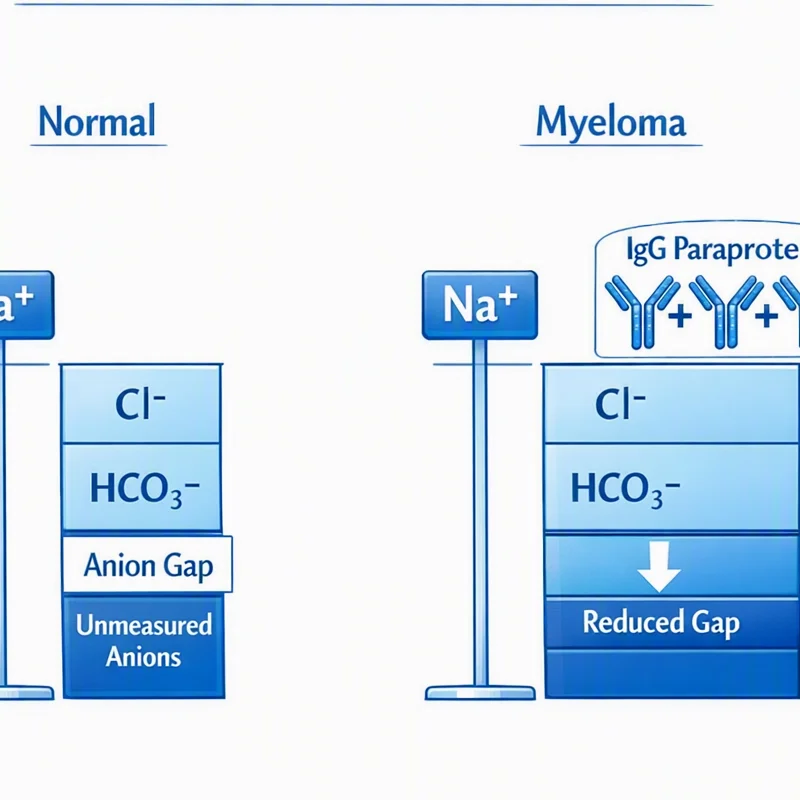
For this reason, it is often wise to correct for albumin whenever albumin is markedly reduced. This makes the anion gap more trustworthy as a screening marker and enhances the interpretation of the serum chemistry panel.
Frequent Causes and Clinical Interpretation
Interpreting the anion gap requires more than determining whether it is high or within range. The result should be viewed as part of the broader pattern of acid-base disorders. The best question is not just “Is the gap abnormal?” but “What type of disorder does this pattern suggest?”
A number of common causes call for special attention. Toxic alcohols can cause a elevated-gap pattern because their metabolites produce acid and add to unmeasured anions. Salicylates may also cause complex acid-base changes, at times with mixed respiratory and metabolic findings. Uremia, which indicates advanced kidney dysfunction, can cause acid retention and contribute to a high gap. These conditions can be serious, so identifying the pattern early matters.
At the bedside or in a chart review, the anion gap should be reviewed alongside symptoms, medications, renal function, and exposure history. A rising gap may point to worsening illness, while a low or normal result does not always mean the metabolic problem is gone.
Helpful interpretation steps include:
- Review the serum chemistry pattern for alignment with the reported bicarbonate and chloride values. Evaluate for hypoalbuminemia and consider albumin correction. Assess whether the pattern fits high anion gap metabolic acidosis or normal anion gap metabolic acidosis. Identify clinical clues such as toxin exposure, kidney failure, GI losses, or insulin deficiency. Apply the result to guide follow-up testing and treatment decisions.
This process helps turn a simple number into a useful part of the diagnostic process. The calculator becomes a way to identify patterns, refine the differential, and support timely management of an electrolyte imbalance or larger acid-base problem.
FAQ
What is an anion gap calculator used for?
An anion gap calculator is used to compute anion gap values from routine lab results and assist screen for metabolic acidosis. It is a fast diagnostic tool for detecting an acid-base disorder, especially when the goal is to identify a high-gap pattern or a normal-gap pattern that needs further interpretation.
How do you determine the anion gap from lab values?
Apply the anion gap formula: serum sodium less the sum of the sum of serum chloride and serum bicarbonate. In other words, anion gap = serum sodium - (serum chloride + serum bicarbonate). This formula relies on standard laboratory values from serum chemistry to calculate the amount of unmeasured anions.
What does a high anion gap mean?
A high anion gap usually means there are extra acids in the blood, which is why it is associated with high anion gap metabolic acidosis. Common causes include lactic acidosis, ketoacidosis, and renal failure. It can also occur with toxic alcohols, salicylates, or uremia.
Why is albumin correction important in the anion gap?
Albumin contains negative charge and strongly influences the gap. With hypoalbuminemia, the measured result may underestimate the true acid burden. That is why albumin correction or the albumin-corrected anion gap is important for accurate interpretation, especially when trying to correct for albumin in a patient with suspected acidosis.
Can a normal anion gap still indicate metabolic acidosis?
Indeed. A normal value can still occur in normal anion gap metabolic acidosis, also called hyperchloremic acidosis. This pattern is often seen with diarrhea or renal tubular acidosis. So a normal gap does not exclude metabolic acidosis; it just suggests a different cause and pattern of acid-base balance.